TSW / Preconstruction

Toronto preconstruction, read carefully.

Buying pre-build is a five-year decision priced on a floor plan and a rendering. The right project rewards the wait; the wrong one absorbs the deposit. TSW represents preconstruction buyers with the same two-partner underwriting that runs every other engagement.

~25,000
New Toronto units launched annually
15–20%
Typical deposit, spread 12–24 months
3–5 yrs
Launch to occupancy on most projects
$0
Buyer cost — builder pays the commission
A preconstruction unit is not a piece of real estate. It is a five-year contract on a promise. The underwriting is different, and the diligence is different, and the buyer who treats it as a resale purchase usually pays for that mistake at year three.

Toronto is the largest preconstruction condominium market in North America. Somewhere between twenty and thirty thousand new units are launched each year, across roughly a hundred and fifty projects, from downtown supertall towers to mid-rise infill in Leaside and King West. The market is deep, competitive, and — for buyers who know how to read it — one of the more genuinely interesting places to underwrite property in Canada. It is also, for buyers who do not know how to read it, one of the more efficient places to lose meaningful money.

The difference between the two outcomes is not luck. It is the ability to distinguish, at the moment of purchase, between the projects that will outperform their asking price by delivery and the ones that will underperform. That distinction depends on the building, the builder, the neighbourhood, the deposit structure, the finish package, the maintenance-fee trajectory implied by the disclosure statement, and the size and character of the eventual resale audience. Almost none of that is on the marketing brochure. All of it is on the underwriting.

The Toronto preconstruction market is meaningfully bifurcated. There is a small set of projects each year that are essentially guaranteed to appreciate through delivery — projects from marquee builders (Great Gulf, Menkes, Tridel, Concord, Lifetime, Empire, Rogers, Amexon) in neighbourhoods with real fundamentals, at a price that reads correctly against expected resale comps three to five years out. And there is a much larger set that will trade sideways or backwards, particularly the ones marketed most aggressively to first-time buyers with a heavy investor thesis. TSW spends its preconstruction time in the first category and, on the whole, walks clients away from the second.

What preconstruction rewards is patience, capital that can wait, and the willingness to hold for the full five-to-seven-year cycle. What it punishes is the assumption that the deposit is refundable, that the assignment market will always be there, that the finish package will match the model, and that the occupancy fee schedule will be short. Every one of those assumptions is wrong on some percentage of projects, and reading the disclosure statement is what tells you which.
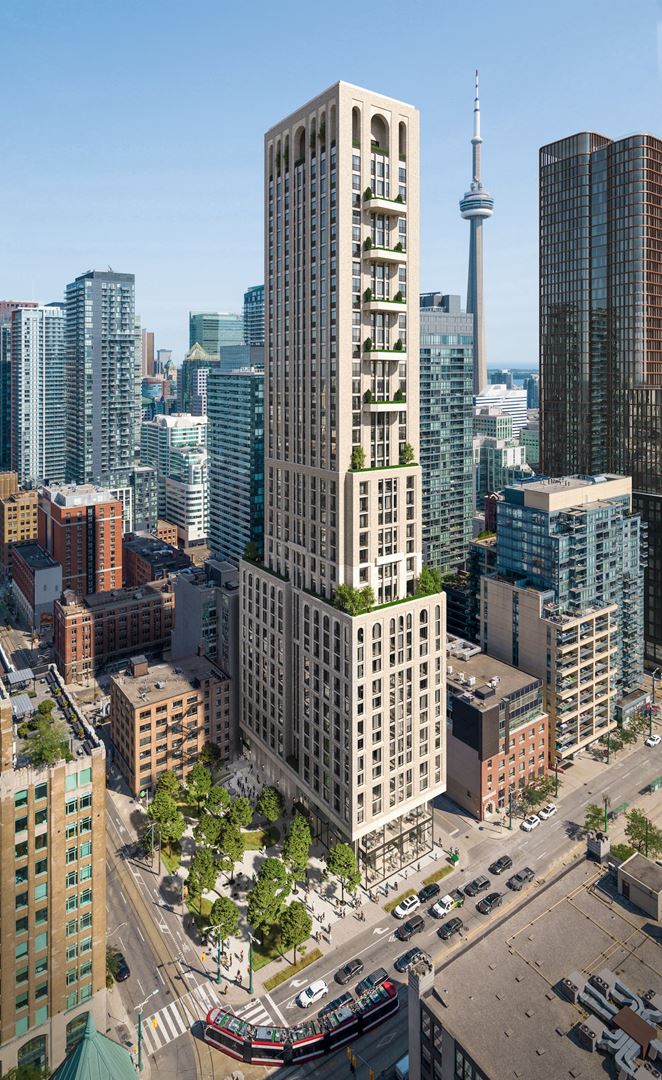
Four stages, five to seven years.

Every Toronto preconstruction purchase moves through four distinct stages, with different economics and different risks at each. Buyers who understand the whole path make better decisions at the front.

01 — Registration
Platinum & VIP release.
Projects begin with a private allocation window — platinum brokerages get first units, VIP brokers next, public last. Best floor plans, lowest prices, and heaviest incentives flow to the platinum and VIP tier. Access here is the whole game.
02 — Signing
The APS and the 10-day window.
On signing, the Agreement of Purchase and Sale triggers a mandatory 10-day cooling-off period. A real estate lawyer must review the APS, disclosure statement, and budget within that window. The lawyer's read is the moment the deal is actually underwritten.
03 — Deposits
15–20%, over 12–24 months.
Deposits are structured — typically 5% on signing, 5% at 30–60 days, 5% at 180 days, 5% at occupancy. Held in trust, protected by Tarion. Luxury projects and international-buyer contracts sometimes go to 25–35%. Cash flow planning is a diligence item, not an afterthought.
04 — Occupancy → closing
Two closings, not one.
At occupancy, the buyer takes possession and pays monthly occupancy fees to the builder. Final closing — title transfer, mortgage funding, condo corporation registration — usually follows 3–12 months later. Occupancy fees are the interim cost of holding.

The underwriting stack.

Builder track record. Not the marketing site — the actual delivery history. On-time completion rates, discrepancy between renderings and delivered product, warranty claim volume, financial stability of the developer, and behaviour on past occupancy-fee schedules. A few Toronto builders deliver reliably in the top decile; a few underperform reliably in the bottom decile; the middle band is where the read matters most.

Location fundamentals. Is this project in a neighbourhood with genuine resale depth at the price band the finished product will command? A $2,000/sqft Yorkville project trades in a completely different resale market than a $1,300/sqft King West project even though both markets look active on MLS. We read the resale audience specifically, not the neighbourhood generally.

Floor plate and unit line. Every building has efficient lines and inefficient lines, corner units with premium and interior units without, view corridors that will change with future development. The line matters more than the floor. Choosing the right line is worth more, on delivery, than choosing the right building.

Maintenance-fee trajectory. Buildings launch with an estimated maintenance fee that is almost always low. The real question is what that fee looks like at year three, year five, year ten — driven by amenity load, mechanical complexity, reserve fund adequacy, and the developer's track record on fee escalation. This is one of the top three factors in resale value, and it is barely mentioned in most sales presentations.

Deposit structure and cash flow. A 20% deposit spread across 24 months is a different cash flow decision than a 25% deposit front-loaded to signing. We model the cash flow, the interest cost of the deposit tranches, the occupancy fee run, and the final closing costs before recommending a purchase.

Assignment clause. If the buyer needs to exit before closing — and roughly 15–20% of preconstruction buyers do — the assignment clause is what makes that possible or impossible. Read before signing; not after.

Two partners. One underwriting standard.

Preconstruction is the category where representation matters most and is most poorly understood. The default assumption is that buyers should just walk into a sales centre and sign — the builder pays the commission either way, so representation feels free. The catch is that the sales centre's job is to sell that specific building. Ours is to walk you away from it if the underwriting fails.

Steven's platinum-brokerage relationships deliver first-tier VIP allocation across the marquee Toronto builders — Great Gulf, Menkes, Tridel, Concord, Amexon, Lifetime — meaning access to the best floor plates, lowest launch pricing, and negotiated incentives (capped development charges, assignment allowances, extended deposit terms, decor credits) before the units reach the broader broker network. Twenty-five years inside the Toronto luxury market means the invitation list is a phone call, not a form submission.

Tal's building-level dataset underwrites the individual project — line-by-line: builder delivery history, comparable-project maintenance-fee trajectories, floor plate efficiency, resale-audience depth at the finished price point, expected occupancy-fee run, closing-cost modelling, and the dispersion between advertised and delivered sqft on the builder's previous projects. This is the diligence layer that separates buyable projects from marketable ones.

Both partners run the preconstruction conversations directly. There is no team layer, no junior analyst assembling comps, no handoff to an assistant. If the project pencils, we will help the client into it at the best terms available. If it does not, we say so — and no amount of aggressive brochure design changes the underwriting.

Begin a private conversation →
07— Frequently asked

Toronto preconstruction, by question.

What is preconstruction in Toronto?

Preconstruction is the sale of condominium units before the building is built — often two to five years before occupancy. Buyers reserve a unit with a deposit structure, sign an Agreement of Purchase and Sale under Tarion protection, and take title at final closing after construction is complete. Toronto sees roughly 25,000 preconstruction condo units launched each year across dozens of projects.

How is the preconstruction deposit structured?

A typical Toronto preconstruction deposit is 15%–20% of the purchase price, spread over 12–24 months. A common structure is 5% on signing, 5% in 30–60 days, 5% in 180 days, and 5% at occupancy. Luxury projects and international-buyer contracts sometimes go higher (25%–35%). Deposits are held in trust under Tarion protection.

What is occupancy versus final closing?

Occupancy is when the buyer takes possession of the unit and begins paying monthly occupancy fees to the builder — this is not yet ownership. Final closing (title transfer, mortgage funding, registration) happens later, once the building is registered as a condominium corporation, typically 3 to 12 months after occupancy. Occupancy fees cover the estimated mortgage interest, property tax, and maintenance for that interim period.

What are the risks of buying preconstruction in Toronto?

The core risks are (1) delayed occupancy or closing, (2) final unit finishes differing from the model suite, (3) assignment restrictions if the buyer needs to exit before closing, (4) HST rebate complications for non-owner-occupied purchases, and (5) builder default. All are manageable with the right agreement review and the right builder. Choosing a builder with a track record of on-time delivery, a project with strong demand fundamentals, and a lawyer who reviews the APS before the 10-day cooling-off period ends matters more than the finish package.

Can preconstruction condos be assigned before closing?

Most Toronto preconstruction contracts allow assignment (selling the contract to a new buyer before final closing), but almost all charge an assignment fee ($5,000–$15,000 is typical) and require builder consent. Some builders restrict assignments until 80% or 90% of the building is sold. The assignment market is real but thinner than resale — buyers should not assume they can flip before occupancy without careful planning.

Who should represent me in a preconstruction purchase?

TSW Realty — Tal Shelef and Steven Wagman — represents preconstruction buyers with two layers of underwriting: building-level data (cap rates, maintenance fee trajectories, builder reputation, floor plate efficiency) and brokerage relationships (VIP allocation access, off-market platinum releases, negotiated incentives). Preconstruction agents are compensated by the builder; buyer representation adds no cost and adds meaningful diligence to the decision. View current work at /preconstruction, or begin a private conversation at /contact.

Get in touch
Or email contact@tswrealty.com directly.